Zum Inhalt springen

Svenja Brodt

Principal Investigator

Core:

Sebastian Müller

Postdoc

My research is mainly focused on methods development for MRI. This includes a variety of MR contrasts like CEST, 31P spectroscopy and functional MRI at field strengths ranging from 1.5T to 14T, but e.g. also simulations on the origin of BOLD MRI and data analysis. I am in particular interested in bridging the gap between development and application and want to foster the combination EEG and MRI for research on neuroscience.

David Emanuel Vetter

Postdoc

I am working on disentangling homeostatic regulation of experience-induced plasticity on one hand and learning on the other hand, and especially the role of different sleep stages in these processes. I’ll employ brain-state dependent acoustic stimulation to interfere with consolidation and homeostasis during sleep. I am particularly interested in testing whether and how these processes differ and interact. To observe and characterize plastic changes, i will employ MRI (estimation of GMV, dwMRI, fMRI) and TMS.

Manfredi Alberti

PhD Candidate

My PhD project focuses on analysing the complex interplay between psychological, cognitive and biological processes, by using multimodal MRI, such as fMRI, DWI or MWI. As a biologist, my focus is on investigating microstructural changes co-occuring with the formation and consolidation of engrams in order to identify new potential biomarkers at the cellular and tissue level. Furthermore, I would like to study the link between changes in brain connectivity and memory retrieval.

Thananya Charoenpattarawut

PhD Candidate

I have always been intrigued by our ability to transform constant streams of information we encounter each day into our own unique sets of memories. These memories do not only define who we are but also further affect how we experience the world. Using a variety of neuroimaging techniques, I aim to investigate what and how biological mechanisms and cognitive processes come together to enable us to acquire, process, and make use of different forms of memories during my PhD.

Svenja Klinkowski

PhD Candidate – (co-supervision with Prof. Steffen Gais, University of Tübingen)

I am highly interested in the neurobiological mechanisms of human behavior, as well as the interaction of psychological, cognitive and biological processes. In my current research, I combine different imaging methods to identify the functional dynamics, as well as microstructural plasticity of neural systems that are implicated in memory formation and consolidation. In addition, I investigate whether these memory systems differ in the quality of their memory representations using multivariate methods.

Marius Kreis

PhD Candidate

In my PhD research, I use different neuroimaging techniques to study the functional dynamics and microstructural plasticity changes involved in memory formation in the human brain. I’m interested in how different aspects of complex memories are stored at the systems level. This includes identifying memory engrams for basic visual features in early visual areas and gaining insight into the mechanisms involved.

Lena Schroeder

PhD Candidate

My PhD project focuses on the mechanisms underlying memory consolidation during wakefulness and sleep. I am particularly interested in how repeated rehearsal of information rapidly stabilizes memories and how this process may differ from sleep-dependent memory consolidation. Using various neuroimaging techniques, I investigate the networks involved in memory reactivation across different brain states and their contribution to forming a stable memory.

Students:

Christian Bernges

Research Assistant

TBA

Federica Giudetti

Phd Internship 

TBA

Sara-Estelle Goesswein

Master Thesis Student

I believe, there is no such thing as isolation or purposelessness in the brain. Understanding how systems interact and work in detail has always fascinated me. Topic-wise, I am intrigued by Plasticity, Emotion, Social Cognition (especially Communication & Language), and Visual Perception. Method-wise, (f)MRI was one of the reasons for me to start my master’s in Neuro-Cognitive-Psychology, I am in awe whenever I can work with these machines. Now I’m super excited to be here for my thesis!

Lia-Sophie Hartmann

Master Thesis Student

Since I can remember I have been really interested in neurosciences and sleep especially. I always wondered why we dream and find it really interesting what our brain does while we sleep. I am glad that I am a research assistant now in exactly that field and can find out more about it.

Lisa Kuntzsch

Research Assistant

TBA

Sara Kuppe

Doctoral Thesis Student

I always wanted to understand how consciousness works, and studied cognitive science as a bachelor. After getting more questions than answers, I wanted to learn how the whole body works on a more cytological and physiological level, and started studying medicine. I’m really interested in neurosciences, and how cognition is influenced by factors like mood, hormones or menstrual cycle. Also, I am really amazed how we can map microscopic structures and activation patterns in the brain using MRI. Now, I am doing my doctoral thesis here, on the effects of acute stress on diffusion MRI.
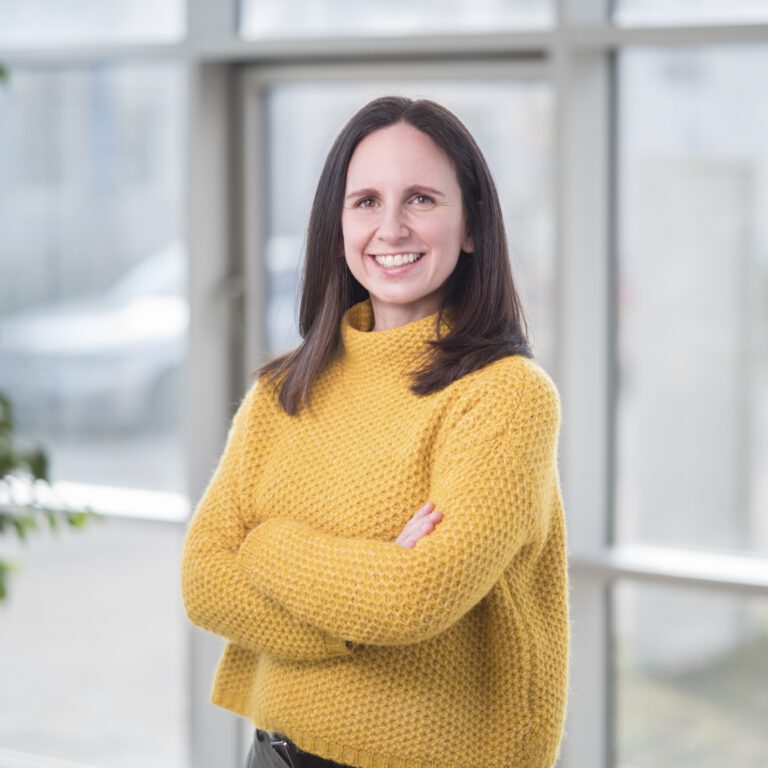
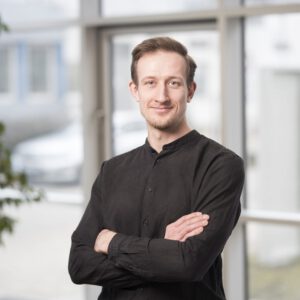
Pauline Lutz

Lab Rotation

As a masters student in Neural and Behavioral Sciences I have a strong interest in how everyday internal states shape brain structure and function. During my lab rotation, I aim to investigate how acute stress affects brain microstructure by using diffusion-weighted MRI. My project focuses on analyzing diffusion-derived parameters such as mean diffusivity and kurtosis to assess stress-related microstructural changes. Generally, I am interested in how internal states are reflected in MRI-based markers of brain microstructure and plasticity.

Marco Rese

Master Thesis Student

While the importance of sleep cannot be overstated, its role in memory consolidation is of particular interest to me. Using polysomnography, fMRI, and behavioral measures during my lab rotation and master’s thesis, I aim to investigate the sleep stages and neural events underlying the stabilization of newly encoded information. To estimate the impact of sleep events such as sleep spindles on the formation of memory engrams, I will compare post-sleep memory performance with that of participants subjected to sleep deprivation.

Alumni:

Mohamed Alnokrashy

Master Thesis Student

Tedd Denis

CaCTüS Intern

Paul Fiedler

Research Assistant

Florentine Klepel

PhD Candidate (co-supervision with Prof. Steffen Gais, University of Tübingen)

Maximilian Müller

Research Assistant

Melisa Özdemir

Research Assistant